Sustainable porous carbon derived from shrimp shell waste for multifunctional removal of organic dyes and heavy metals
Method
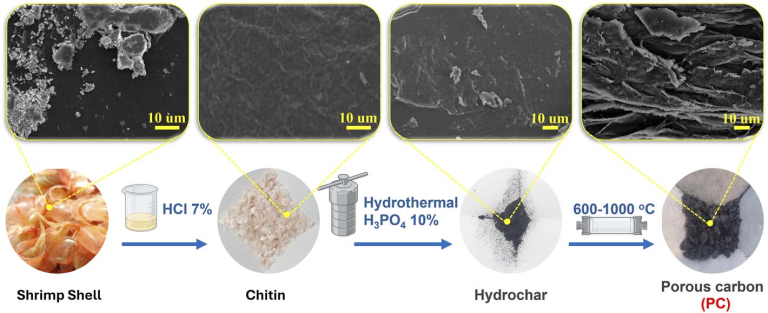
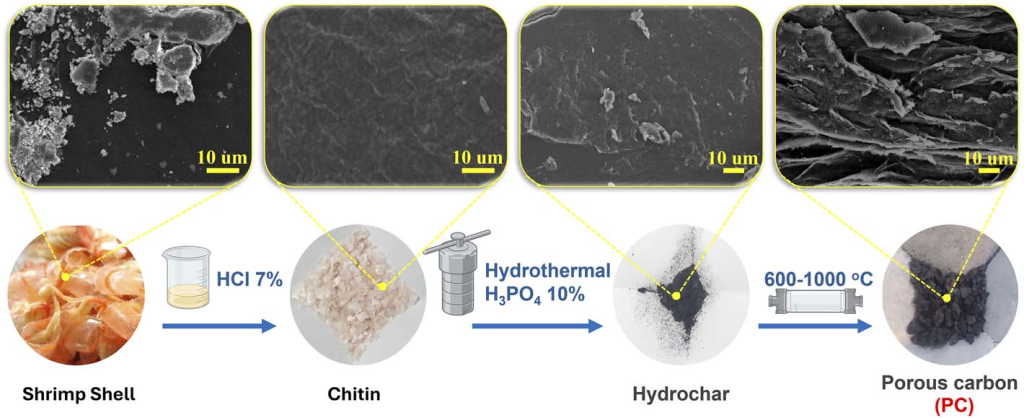
Shrimp shells (Penaeus monodon) were demineralized with HCl, hydrothermally activated with H₃PO₄, then carbonized at 600–1000 °C.
Key Finding
Carbonization at 1000 °C gave the best pore architecture, enabling methylene blue (MB) adsorption and Cr(VI)/Mn(VII) removal through pH-dependent adsorption–reduction pathways.
Notable Numbers
BET surface area of 662 m²/g, zeta potential of −51.84 mV, and a maximum MB capacity of 54.54 mg/g with over 90% removal efficiency.
Significance
Turns seafood-processing waste into a low-cost, eco-friendly adsorbent for both organic and inorganic pollutants.
Additional Figures